×

Jelena Ostapenko: Don’t underestimate me

Latvian sends signal of intent ahead of Roland-Garros

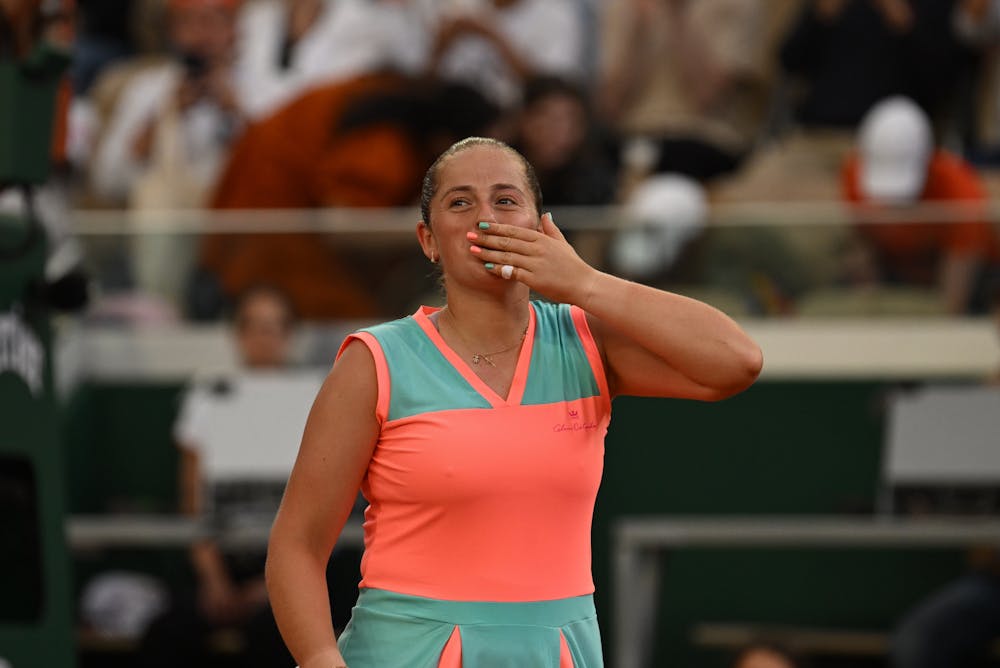
Jelena Ostapenko, Roland-Garros 2024, Simple Dames, 1er Tour
 - Reem Abulleil

Win or lose, Jelena Ostapenko has a clear message to the world.

The big-hitting Latvian showed everyone what she's capable of when she stunned a third-seeded Simona Halep by rallying from a set and 0-3 down in the 2017 Roland-Garros final to become a Grand Slam champion, just two days after turning 20.

Her career since has been a roller coaster affair.

While she has mostly maintained her place in the world’s top-50 – with the exception of some weeks here and there – stringing together top performances on a consistent basis has been difficult for Ostapenko, who when firing on all cylinders, can be a terrifying prospect.

Take this year for example. After losing her first rounds at the Australian Open and Abu Dhabi, the 27-year-old had a big week in Doha in February. She defeated Liudmila Samsonova, Jasmine Paolini, Ons Jabeur, and Iga Swiatek to reach the final of the Qatar Open – a WTA 1000 event.

She then lost four matches in a row – the final in Doha, and openers in Dubai, Indian Wells and Miami.

That lull was then followed by a run to the doubles title on green clay in Charleston and the singles title on red indoor clay in Stuttgart, where she stunned three top-10 opponents, including the world’s top-two, Aryna Sabalenka in the final and Swiatek in the quarters.

Her win against Swiatek at the WTA 500 in Stuttgart was her sixth from six meetings with the Pole and during her on-court interview after the match, Ostapenko sent out an important reminder.

“She’s a great clay-court player as well. But you know, I won Roland-Garros, so I can say the same thing about myself,” Ostapenko said with a confident smile.

Speaking to Roland-Garros.com on the sidelines of the Madrid Open, Ostapenko was asked if she felt people needed to be reminded of her threat on clay.

“As I said, don't underestimate me,” she replied.

She has proven time and time again that those who do can pay a hefty price.

Does she like being underestimated?

“I mean, sometimes, yes, because people do this and then you go on court and you beat the good players and then they are like, okay, they probably don't underestimate you anymore,” she said.

Ostapenko recalls she “had a good feeling” when she arrived in Stuttgart and felt confident about winning before each match she played that week. She was most proud of her mentality and how hard she fought through every round and believes that even if some matches don’t go her way during the season, “I think I always had the game to play well”.

Ostapenko has a simple explanation for her difficult stretch between Doha and Stuttgart.

“I honestly wanted the hard-court season to finish faster, because I don't really like it that much, to be honest,” she concedes.

“I mean, the tournaments in the Middle East are really great. Indian Wells was a great tournament. Miami is not one of my favourite tournaments, so I really wanted it to be over quicker, especially not playing so well those two tournaments.

“Charleston was a good tournament, winning doubles, getting some confidence.”

Ostapenko, who peaked at No.5 in the world in 2018 and has had multiple stints inside the top 10, is not obsessed with hitting a certain number. 

She’s currently at 18 in the world but, unlike most fans, doesn’t often wonder why she isn’t ranked higher when she’s out there defeating the tour’s top two players in the span of three days. 

“I think it's not about just the ranking. I think it's more about the things I have to work on and the things I was working on, obviously, the last few months as well,” she explained. 

“And when they click and when everything comes together, the result will be there. It's not really about the rankings.”

When asked about the kind of work she’s been putting in, Ostapenko reveals the biggest effort has been done with her psychologist, to develop her mentality. 

“Before I was very hard on myself and I'm such a perfectionist. So every time I lost a point, I was really like disappointed and then sometimes angry. But now I feel like I'm nicer with myself and it helps a lot,” she said. 

“I think the most important thing is to be in good contact with yourself. And that's when the results will come.”

The title in Stuttgart has given Ostapenko a welcome boost ahead of Roland-Garros. Since she lifted the Coupe Suzanne-Lenglen in Paris in 2017, Ostapenko hasn’t made it past the third round at the tournament. 

Does she feel confident in her chances heading there this year?

“I mean, for sure. I always knew I can play well on clay court and I know how to move and slide. I just need to focus on the things I have to do,” she said. 

Ostapenko broke the top 100 nearly 10 years ago, when she was 18. She dismisses the idea that anyone would consider her a veteran and assures she has many years ahead of her in the sport. 

Grinding on the tour for over a decade is no walk in the park and Ostapenko admits she suffers from mental burnout from time to time. 

“You get just so tired of travelling every single week on different time zones. You get so exhausted at some points. You just want to leave all that and say, like, 'I'm done with that',” she confessed. 

So what stops her from walking away?

“I think I always try to remember what I achieved and who I am and also how much time I spent doing all that. And that would be probably sad for people and for me to see all this work go to waste.”

Fans would certainly miss Ostapenko. The Latvian is famous for her expressive reactions on court, and there is probably an appropriate Ostapenko GIF for every possible facial expression out there. 

She is well aware of that and has no intention of ever holding back. 

“I honestly always like in general, when I watch sports, I always liked emotional people, the people who always show and share their emotions,” she said.

“I don't really like people who are just walking and just not showing much emotions, because for me, it's so boring to watch those people doing sports. So I'm really like myself always on the court. And I think that's what people like about me.”

She doesn’t hesitate to name Serena Williams when asked to name an athlete she admires the most for showcasing their emotions. 

“I think Serena is the best so far. She's like all those emotions, I love them,” she beamed. 

Ostapenko is clear on what drives her the most. It’s not rankings, it’s not money, not titles… at her core, she is a ruthless competitor, who “hates losing” in anything she contests. 

Her biggest motivation?

“I enjoy beating good players and just showing my really good tennis and just beating good, great players... I think I would say being competitive,” she concludes. 

Watching her play, that certainly makes a lot of sense.

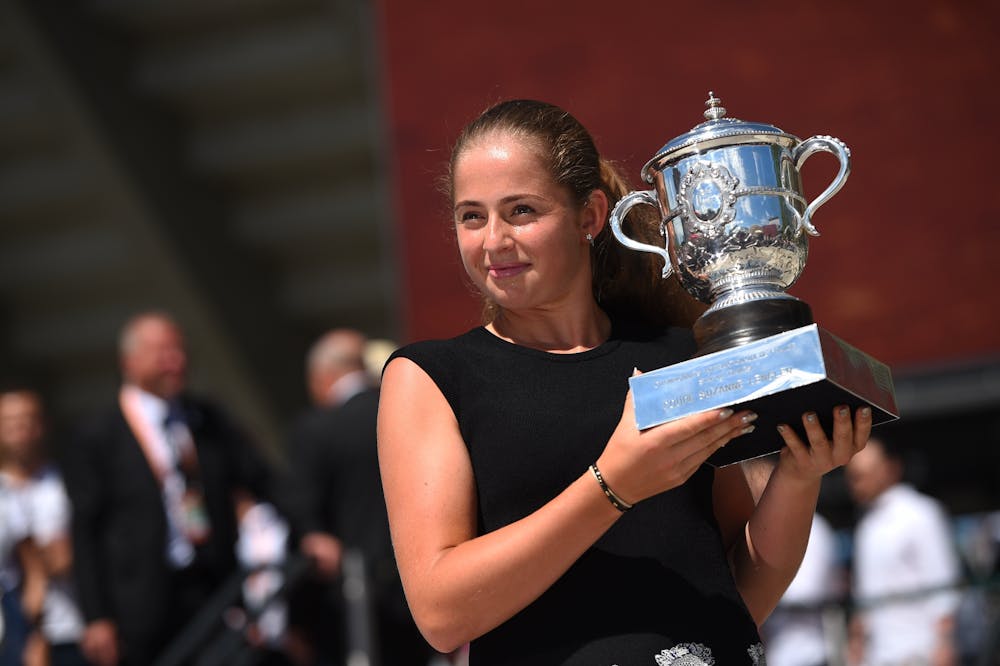
Jelena Ostapenko, Roland-Garros 2017, Photocall / Vainqueur Simple Dames

Get your tickets now!

The Roland-Garros 2025 Opening Week is shaping up to be particularly exciting! Tickets are still available to come and support the future stars of the circuit and watch training sessions with the biggest names on the WTA and ATP Tours.

Click HERE to buy your tickets on the official Roland-Garros 2025 ticketing website