 ROLAND-GARROS
17 May - 6 June 2027
ROLAND-GARROS
17 May - 6 June 2027


It's one thing to prepare for crossing into uncharted territory when closing in on that elusive major trophy.
It is a whole other matter when no one left in the Roland-Garros men’s draw by the second week has gone all the way before.
Tension mounts as favourites crumble and new Slam champion guaranteed
It's one thing to prepare for crossing into uncharted territory when closing in on that elusive major trophy.
It is a whole other matter when no one left in the Roland-Garros men’s draw by the second week has gone all the way before.
That induces a hefty layer of added tension, the rarest of windows when the handful of dominant Grand Slam heavyweights – Jannik Sinner and Novak Djokovic – have crashed out, or in reigning champion Carlos Alcaraz’s case, did not make the start.
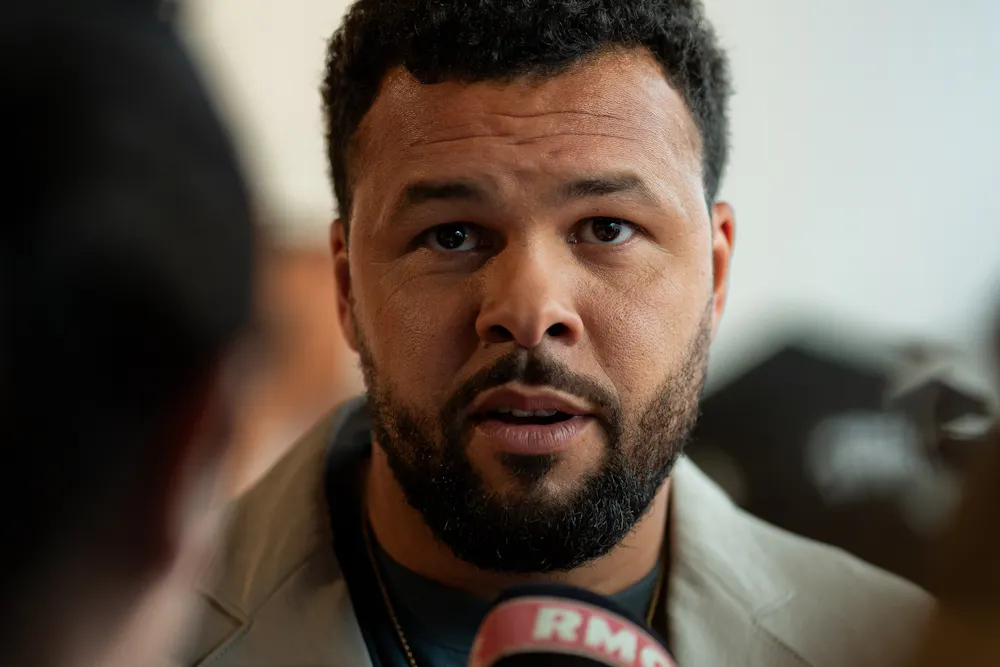
Former French world No.5 Jo-Wilfried Tsonga (main picture) never had that luxury, competing during an era of ‘Big Three’ dominance when even on his deepest runs at least one of them was still standing in the last four.
“Generally, when you're a favourite in a Grand Slam, it's often because you've already won one. In this case, that's not the case,” Tsonga told rolandgarros.com. “Clearly, I think nobody feels like a favourite.
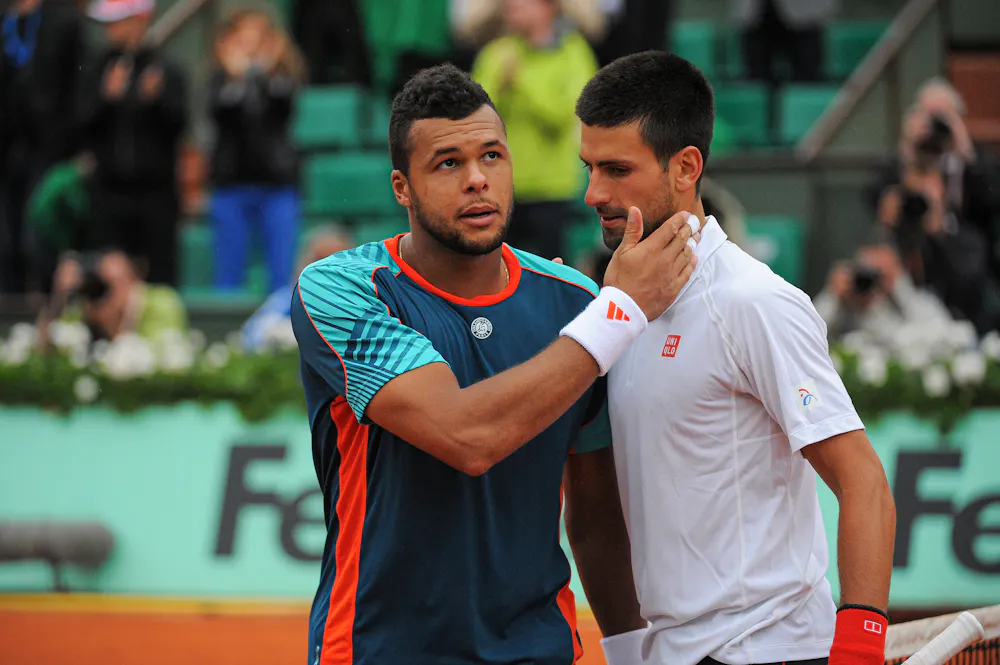
Jo Wilfried Tsonga and Novak Djokovic in the RG 2012 quarterfinal
“It's certain that there are a lot of players who think this might be their year, and so of course it adds a bit of tension but also a lot more fighting spirit because the players obviously think they might be able to go for the trophy.
“The draw is wide open. It's interesting for the fans because they know there's going to be a new winner, and there will be new emotions too. It's always the same players who win – it's always practically the same emotions at the end of the match. It gives you a boost to fight even harder because they inevitably see it as a small opportunity to go for a Grand Slam trophy.”
This is not just any open draw. The two names who have swept the past nine majors between them – Alcaraz and Sinner – haven’t hung up their racquets; there’s no guarantee this window of opportunity will extend beyond this year’s Roland-Garros.
Jo-Wilfried Tsonga
The last time a men’s Grand Slam singles draw was blown wide apart was after the fourth round of the 2020 US Open, when Djokovic was defaulted, Rafael Nadal had elected to skip the tournament and Roger Federer was still recovering from knee surgery.
It was the first major since the 1999 US Open that neither Nadal nor Federer were in a Grand Slam main draw and what transpired was the most nerve-racked five-set final between the two biggest prospects tipped for major glory at the time as Dominic Thiem snuck past Alexander Zverev.
At Roland-Garros the margin for success is perhaps more pronounced in a draw that has not been as open since 2004, the year before Nadal began his reign.
Cedric Pioline, also a French former world No.5, said the extra burden combined with gruelling conditions in the opening week likely contributed to more matches stretching the distance than normal.
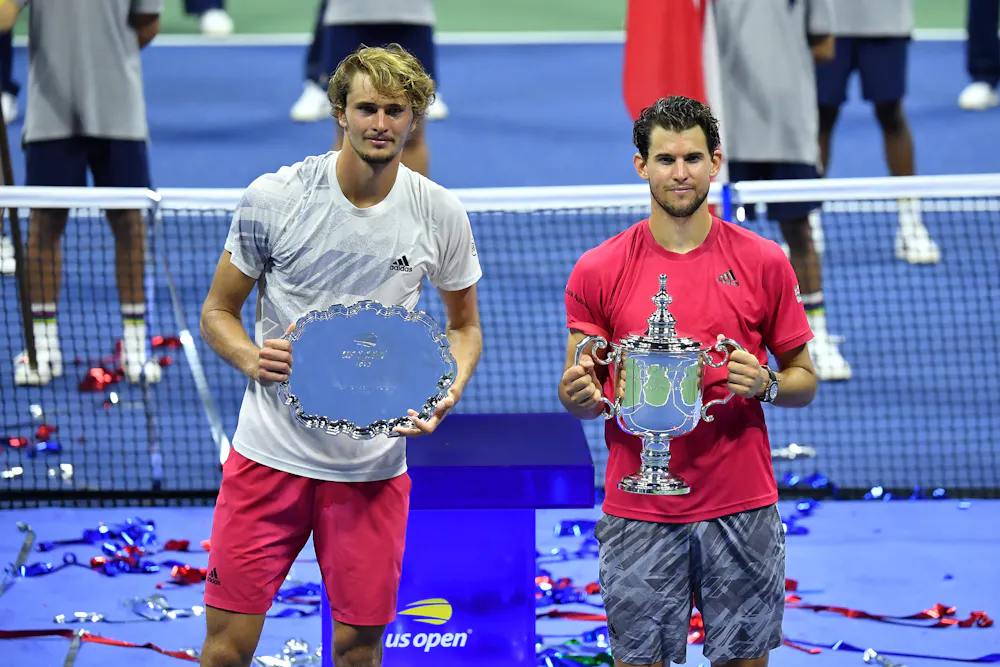
Alexander Zverev and Dominic Thiem at the US Open final in 2020
“I think it does play a role, but it also seems to me that the current players aren't used to this,” Pioline told rolandgarros.com. “The fact that there are open draws makes it impossible [to deal with] for many more players.
“We're talking about more than 20 years ago, let's say Nadal in 2005, it was normal to have one or two players and they pull ahead, but it's quite open behind them… They're not used to it now, so that's what's funny and interesting.
“We'll see who has the ability to best manage their nerves, the stakes and their game. The heat has also been a bit of a factor, a third man almost.”
Only two from the fourth round – second seed Zverev and now-105th-ranked Italian Matteo Berrettini have reached a major final before. The German has the added baggage of having fallen at the last hurdle at three previous Slams.
Cedric Pioline
A champion in Paris at just 17 in 1989, Michael Chang flagged a host of the next generation who appear ready to take the reins and challenge for a first major.
“Sasha’s [Zverev] been playing well and going about his business, but definitely a lot more surprise names in there that you wouldn’t normally see,” Chang told rolandgarros.com.
“I think it’s good for tennis – there’s a lot of great young players, a lot of Next Gen players.
“I think it can be easier in some aspects if you're not dwelling too much on it, but I think it's also a lot of pressure for some of these young guys because there are expectations. There's no question about it.
“I think for me, when I was 17 nobody expected me to win. So I had the freedom to be the underdog in just about every single match I played, for the most part, in the second week. This tournament is a little bit different.”
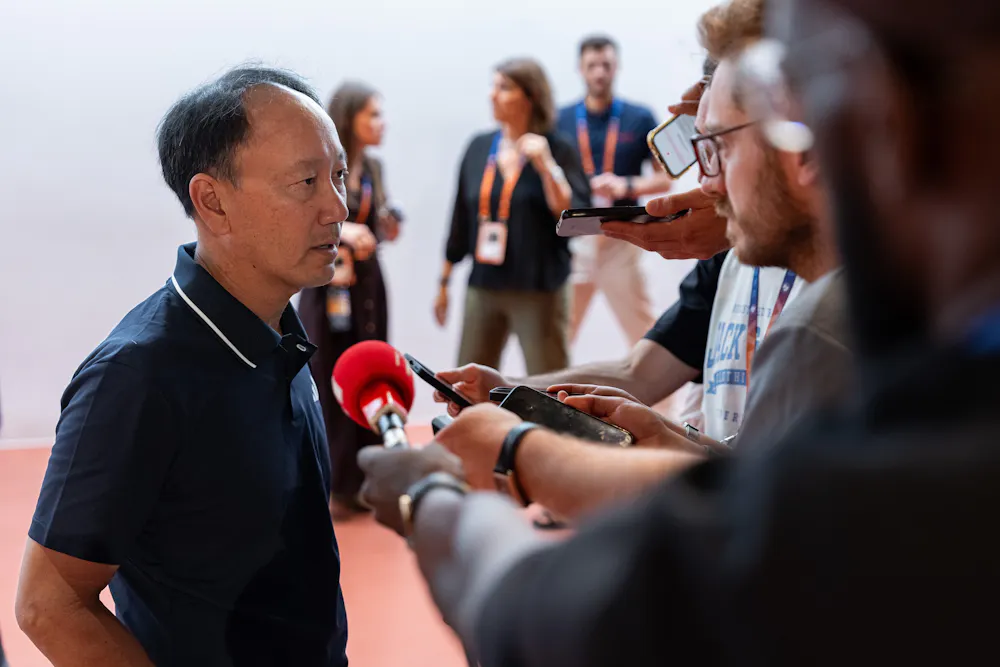
Michael Chang
The former world No.2, now coach of 18th seed Learner Tien, reached the second week in Paris five times, including a second final in 1995.
He said nerves were only part of the equation with such an opportunity on the line. The physicality of a draining first week was not to be discounted.
“I don't think anybody would disagree with me that this is probably the most difficult tournament to win physically,” he said. “It's not necessarily about who's better that day. Sometimes it's about who's feeling better, who's fitter that day.
“This tournament we've already seen that wasn't necessarily the better player that was able to come through, but it was the player who was able to handle the tough conditions.
“At the end of the day, I think whoever stays tough mentally and stays fresh physically and is able to kind of handle the pressures that come from playing here on Philippe-Chatrier [will win the title]. It’s not an easy thing.”