 ROLAND-GARROS
17 May - 6 June 2027
ROLAND-GARROS
17 May - 6 June 2027


Aryna Sabalenka knows the burden of expectation better than most.
As one who can’t help but wear her heart on her sleeve, the world No.1 is the first to admit handling her emotions when the stakes are high has often been her Achilles heel.
Former No.1s Davenport, Kerber back top seed to learn from past heartaches
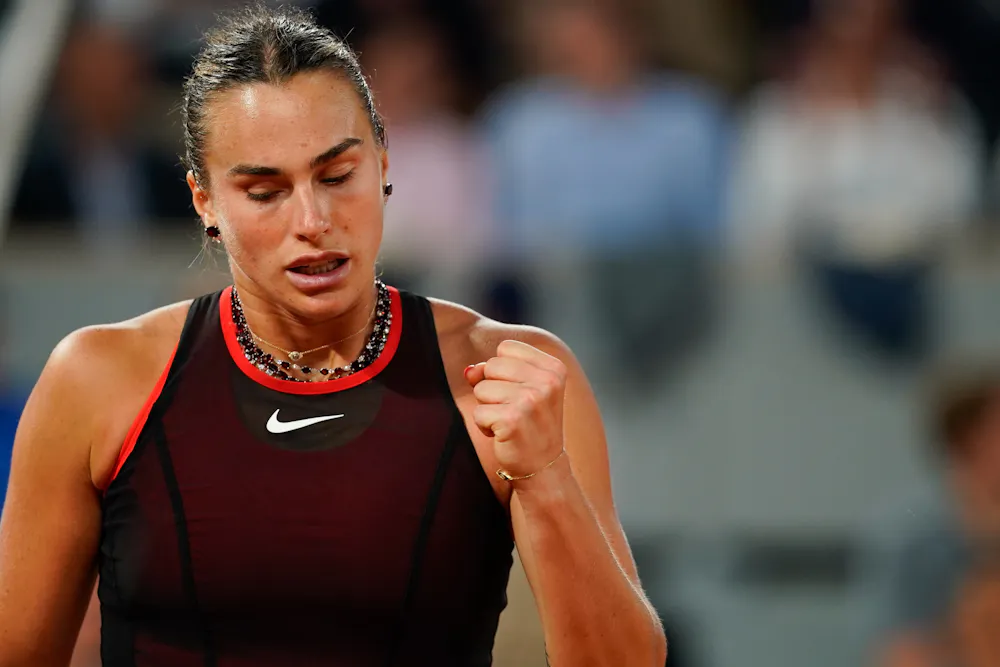
Aryna Sabalenka knows the burden of expectation better than most.
As one who can’t help but wear her heart on her sleeve, the world No.1 is the first to admit handling her emotions when the stakes are high has often been her Achilles heel.
The 28-year-old has discovered as much about herself in defeat as in victory at Roland-Garros where she has suffered among her most heartbreaking losses.
Two in particular stand out – last year’s final, where after ending Iga Swiatek’s 26-match Paris streak she succumbed from a commanding position against Coco Gauff, and in the 2023 semifinals when a match point went begging against Karolina Muchova.
After falling to Elena Rybakina from a break up in the deciding set of this year’s Australian Open final – it left her Slam final record at 4-4 – Sabalenka’s confidence could have taken a hit.
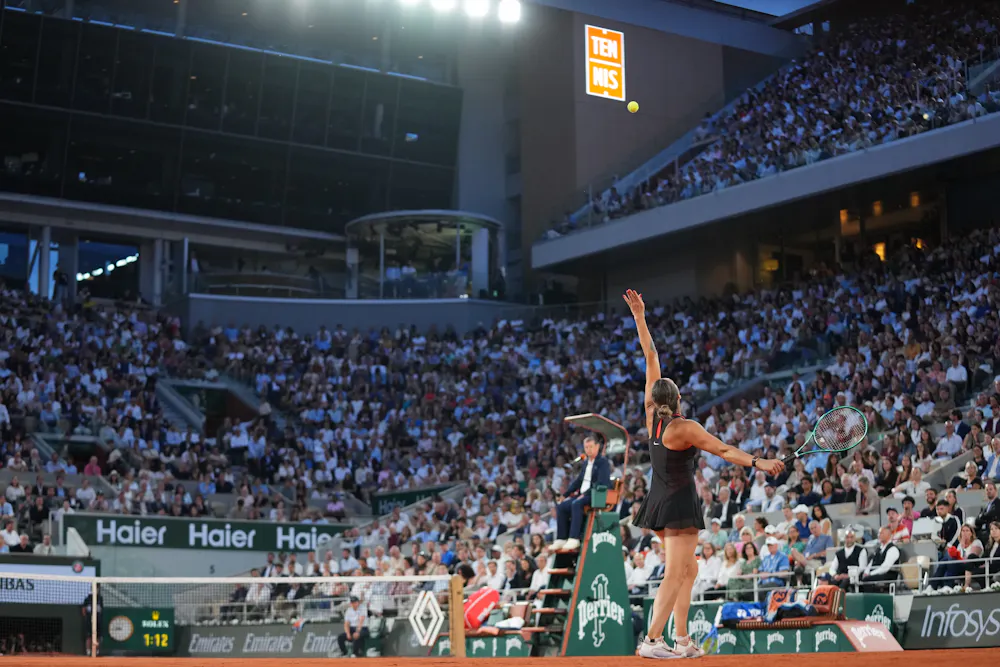
Instead, former world No.1 and three-time major champion Lindsay Davenport notes the way in which she responded, which suggests her journey on the clay this time round could be different.
“One of the things that’s stood out to me the most from the matches this year was the final of Indian Wells,” Davenport told rolandgarros.com.
“She was under a lot of duress mentally there. Rybakina played exceptional tennis, had the match points, but Sabalenka never cracked emotionally. And afterwards, when she spoke about it, she said: ‘My whole goal was to just kind of stay focused.’
“She knows that big matches have gotten away from her because of her emotions. This one, in Australia, got away up 4-1 in the third. She didn’t have as many outbursts, but it seemed that she kind of was getting rattled. I know that her team, they leave no stone unturned. I’m sure they have done a tonne of work on that part of it.”
Four-time champion Swiatek, reigning champion Gauff and second seed Rybakina all tumbled out before the quarterfinals, while the only other top-eight seeds who reached the last eight – No.7 Elina Svitolina and No.8 Mirra Andreeva on the other half of the draw – both own losing records.
Never has Sabalenka been such a heavy favourite before the quarterfinals at a Slam, let alone at Roland-Garros where her pursuit of a first non-hardcourt major continues to gather steam with victory over four-time major winner Naomi Osaka.
Like Davenport, Angelique Kerber is a former world No.1 who claimed three Slams at three different majors.
She expects Sabalenka will have learnt from last year’s heartbreaker on Court Philippe-Chatrier as she grapples with favouritism even earlier than usual.
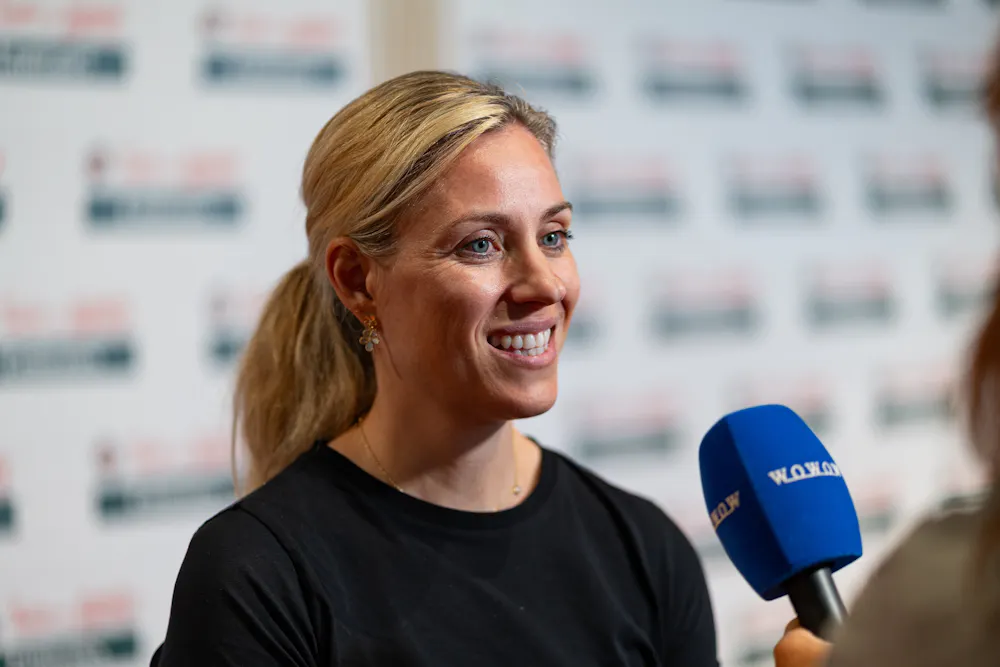
Angelique Kerber during the Roland-Garros Legends media hour
“Mentally she knows already what to expect,” Kerber told rolandgarros.com. “Last year it was a really tough loss for her, and I think that one of the things that she is doing so good is learning from matches that she lost, from tough moments. That was not so easy, and this is what I think she can do better because she exactly knows what happened last year.”
Neither Kerber nor Davenport ever mastered the terre battue in Paris, but both agree the top seed has what it takes to go all the way.
While already a four-time hard-court major winner, Sabalenka’s legacy as one of the modern greats is assured, but Kerber has no doubt what it would mean to add a Slam from a different surface.
“I think a lot. I think, of course winning a Slam is always the goal, and it would mean a lot here,” she said. “She has a lot of confidence. I mean, she didn’t play well in Rome [lost third round to Sorana Cirstea], but it doesn’t matter. It’s a new rule playing at the Grand Slams, and she’s playing amazing here right now.
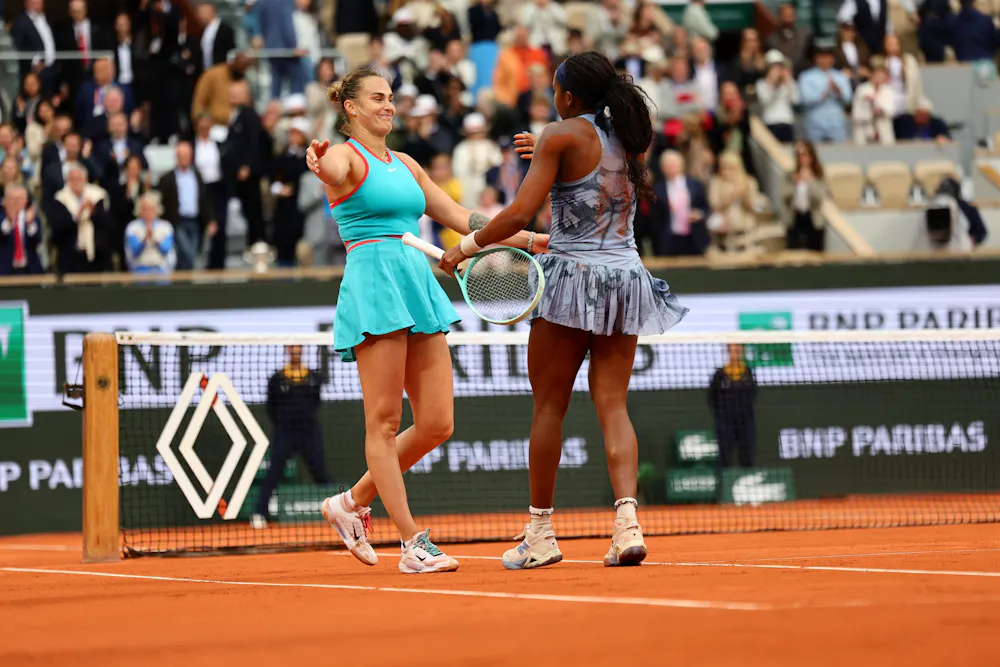
“I think she improved over the last year to be where she is now. For me, she is the player who can win on every single surface. I’m really impressed with where she came from, how she is playing now, how strong mentality she is now, and also how she improved her game. She’s now really a consistent player.”
In a wide-open top half, in which the other three quarterfinalists are all outside the top 20, Sabalenka’s path to a ninth major final is favourable, on paper at least.
Davenport said she’d love to see her earn another shot at the trophy to test where she stacks up mentally.
“There’s a match also that stands out a couple years ago against Muchova out here in the semis, up 5-2 in the third, and she lost it, you know. She was yelling at her camp, and that one got away from her also,” she said.
“So I think this court, there’s a couple of matches there that maybe have a little bit of scar tissue for her. I’m always cheering for people, so I hope she can overcome it. I think it would be maybe one of her greatest achievements if she was able to win here after the history here and also being on the red clay.”