ROLAND-GARROS
17 May - 6 June 2027
ROLAND-GARROS
17 May - 6 June 2027


From the first serves on Day 1 to the trophy presentation following the men's singles final on Day 15, there have been many takeaways from Roland-Garros 2023.
RG 2023: What we learned from men's event
Another action-packed Roland-Garros has taught us much.
Djokovic continues to set new, incredible standards
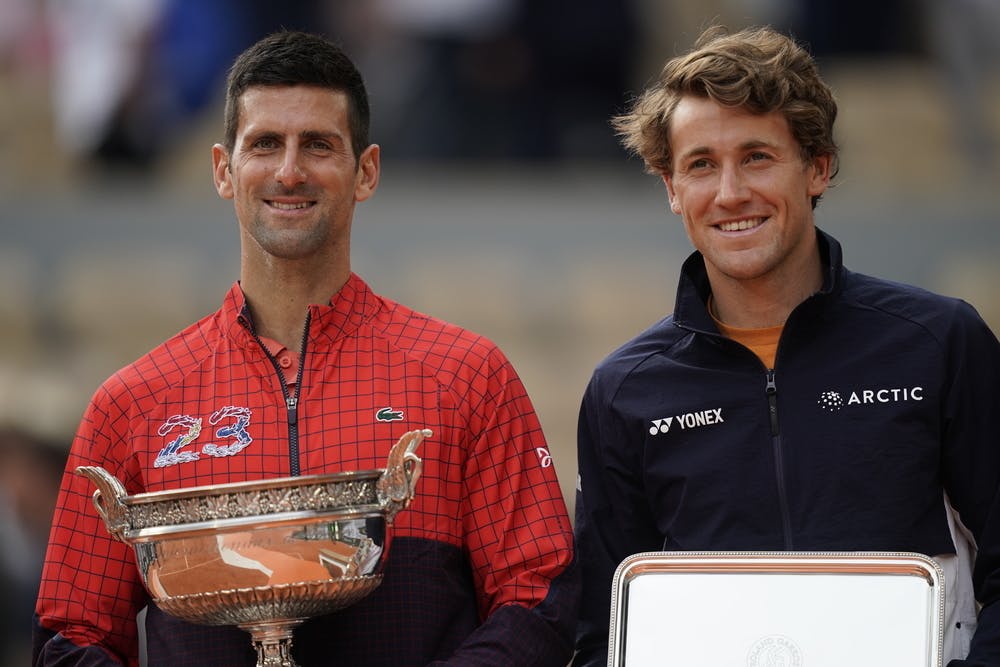
At the age of 36, Novak Djokovic continues to defy age and convention. Here in Paris, he made yet more history by becoming the first man to win 23 Grand Slam titles, moving to one ahead of Rafael Nadal and one behind the overall leader, Margaret Court.
The way he coped with the intensity of Carlos Alcaraz in the semi-finals and the way he handled the occasion in the final showed, yet again, that he is the best player in the world.
This is his third Roland-Garros title and he is the oldest man to win it. When he was under pressure in the final, the nerves clearly visible, he found his game, found his range, and put Ruud to the sword.
He is halfway to the calendar-year Grand Slam for the third time in his career and he’ll go into Wimbledon as the favourite to win it for an eighth time and equal Court with Grand Slam title No.24.
Ruud, too,should be proud of his achievement, reaching a third Slam final from his last five majors and competing all the way through.
Alcaraz’s time will come
Carlos Alcaraz said he was a little “disappointed in myself” after his title hopes ended in painful manner when he cramped against Novak Djokovic in the semi-finals. But the Spaniard showed more than enough over the fortnight to suggest that his time will come at Roland-Garros, and come soon.
His shot-making is second to none and he’s right at home on clay, his court coverage breathtaking at times. Already a Grand Slam champion, he’ll learn from his exit here and it would be no surprise to see him win next year.
"These kind of experiences. I would say I take lesson from that match, you know," he said. "I will try to not [let it] happen again in these matches. I have to take lessons from that experience, it's something that I have to deal [with], and of course I will have more experience in the next match.”
Zverev is back
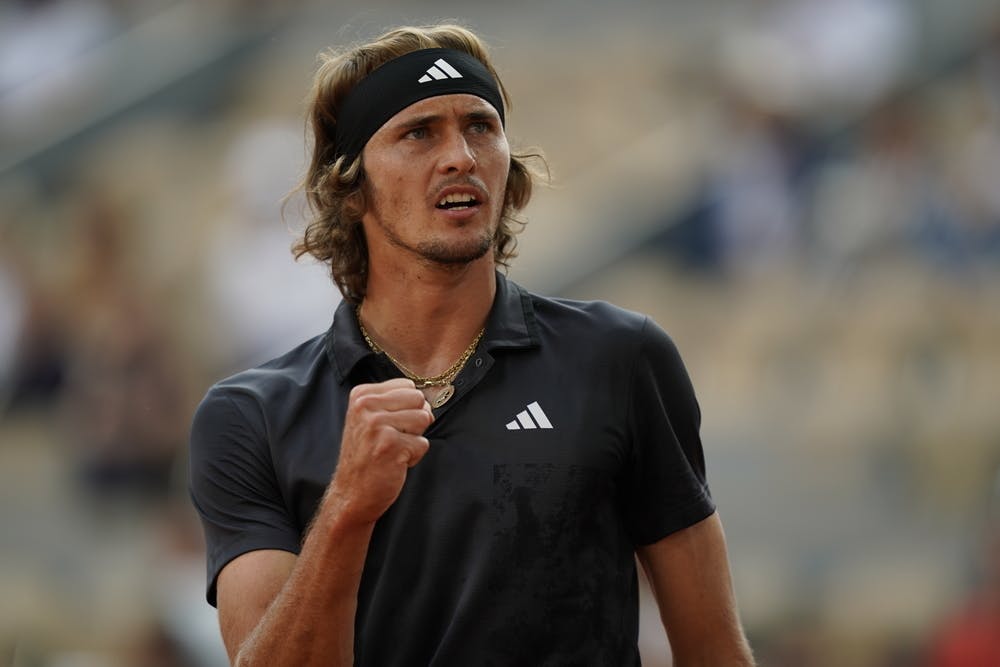
One year after suffering a terrible ankle injury in the semi-finals against Rafael Nadal, Alexander Zverev made it all the way back to the semi-finals for the third year in a row, a run that puts him ahead of schedule in terms of his recovery after he missed the second half of last year.
The German said his performance in his earlier rounds, which included victories over Frances Tiafoe and Grigor Dimitrov, were as good as anything he managed 12 months ago. “I think the last two weeks I played exactly how I played last year,” he said, after losing to Casper Ruud in the semi-finals.
“I think I was kind of back until today [when he was suffering from a minor thigh issue]. I think the first five matches were great matches.”
Zverev has been to a Slam final (at the US Open) and five other semis; now’s the time to kick on.
“I'm happy that I'm back to where I am so soon after the injury,” he said. “Normally it takes longer. I was in the semi-final of a Grand Slam. That's very positive. I missed out on a chance, yes, but that's life. We move on.”
The chasing pack are still chasing
With no Rafael Nadal at Roland-Garros this year as he recovers from hip surgery, the door was open for the next generation to come through and perhaps get to a Slam final.
Much was expected of Daniil Medvedev after he won in Rome but the world No.2 went out in round one to Brazilian Tomas Martin Etcheverry, while Stefanos Tsitsipas looked good until he ran into Alcaraz.
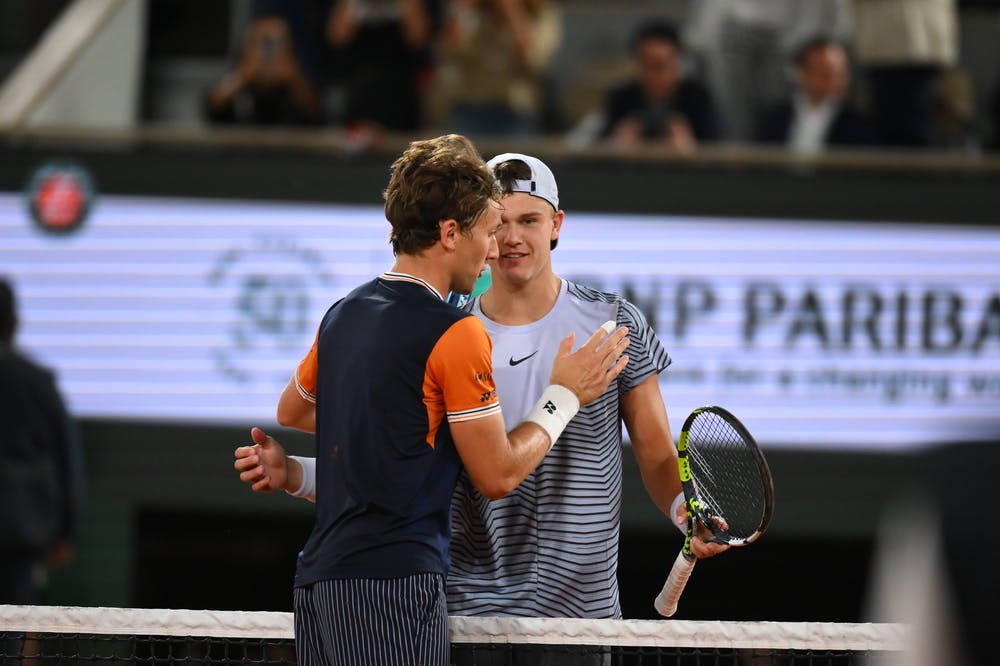
Holger Rune had a great opportunity only to find Casper Ruud too strong in the quarter-finals for a second straight year, and Andrey Rublev was knocked out by Lorenzo Sonego.
There were good signs from the likes of Lorenzo Musetti of Italy, who reached the fourth round, and Juan Pablo Varillas and Francisco Cerundolo, who also made the last 16, but in the end, the 36-year-old Djokovic made a record-equalling 34th Grand Slam final and Ruud reached the final for a second year in a row.
The South Americans are coming
This tournament was notable for the re-emergence on the Grand Slam scene of the South American men.
Next year will be 20 years since two Argentinians contested the men’s final – Gaston Gaudio and Guillermo Coria – and this year, Francisco Cerundolo, Tomas Martin Etcheverry, Juan Pablo Varillas, Nicolas Jarry, Genaro Alberto Olivieri and Thiago Seyboth Wild all reached at least the third round, with the latter beating Daniil Medvedev in round one.
Gabriela Sabatini, the former US Open champion, was full of praise for her fellow Argentinian, Cerundolo. “He has a great forehand and is getting better and better,” she said. They will all be a threat next year.
French players provide the drama... as always
There’s no atmosphere in tennis like Roland-Garros when a French player is on court and involved in a classic.
This year it was the turn of Gael Monfils to bring the drama to the court. Returning from a long lay-off, Monfils trailed Sebastian Baez 4-0 in the final set of their opening-round match but late in the evening, the 36-year-old, suffering from cramps, produced a remarkable turnaround, with the cheers of the Court Philippe-Chatrier crowd ringing around the stadium long after the final point was played.
Monfils had not even known if he would be fit to play in the tournament but afterwards said the atmosphere meant it was in the “top two” matches he has ever played.
“It's one of my best matches, the best sports moment I could experience,” he said. “I guess for some spectators as well. I know I have some friends for the first time they came to Roland-Garros, so I think it was a good experience for them.”
Now that’s an understatement.
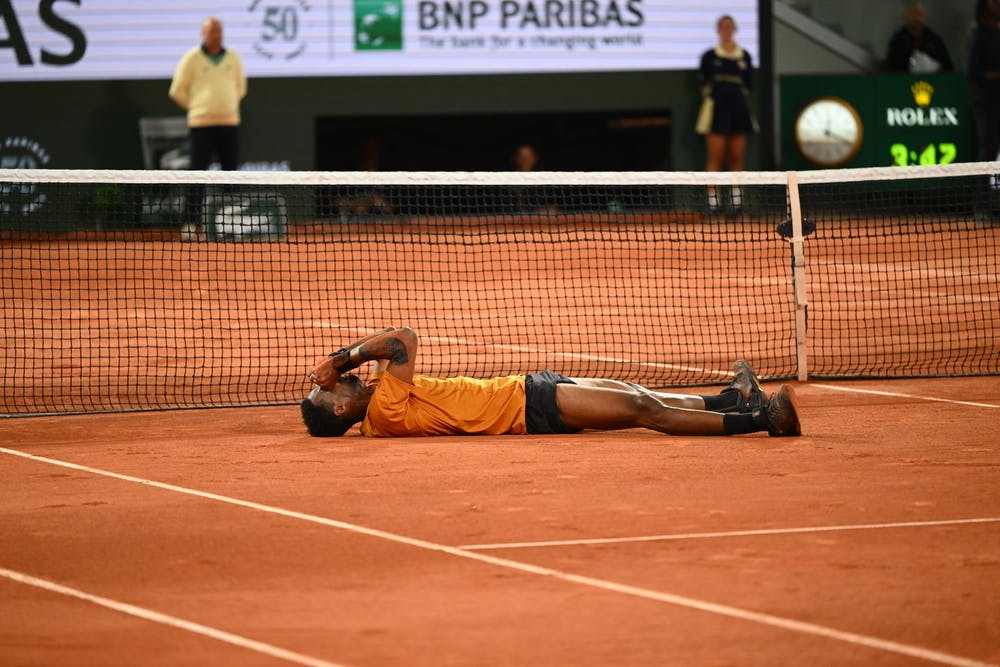
Roland-Garros is a marathon, not a sprint
Clay-court tennis has always been a true test of physicality but this year’s event included more matches that went the distance than usual.
In total, there were 31 five-set battles, split between 21 in the first round, five in the second, four in the third and one in the last 16, when Holger Rune outlasted Francisco Cerundolo in a deciding match tiebreak. Three other matches went all the way to a deciding tiebreak and there were seven matches where a player came from two sets down to win. Extra kudos must go to Juan Pablo Varillas, who recovered from two sets down in each of his first two matches.