 ROLAND-GARROS
17 May - 6 June 2027
ROLAND-GARROS
17 May - 6 June 2027


Herself a supreme champion, Billie Jean King also pioneered for gender equality in the sport, standing on the shoulders of the giant that was her fellow American. She speaks about the memories that come to mind about the Roland-Garros 1956 champion.
Althea Gibson by Billie Jean King
As the first Black woman to win a Grand Slam, Althea Gibson helped break down racial barriers in tennis during the time of segregation. To celebrate the 70th anniversary of this historic moment, Billie Jean King talks about her admiration for this amazing woman.
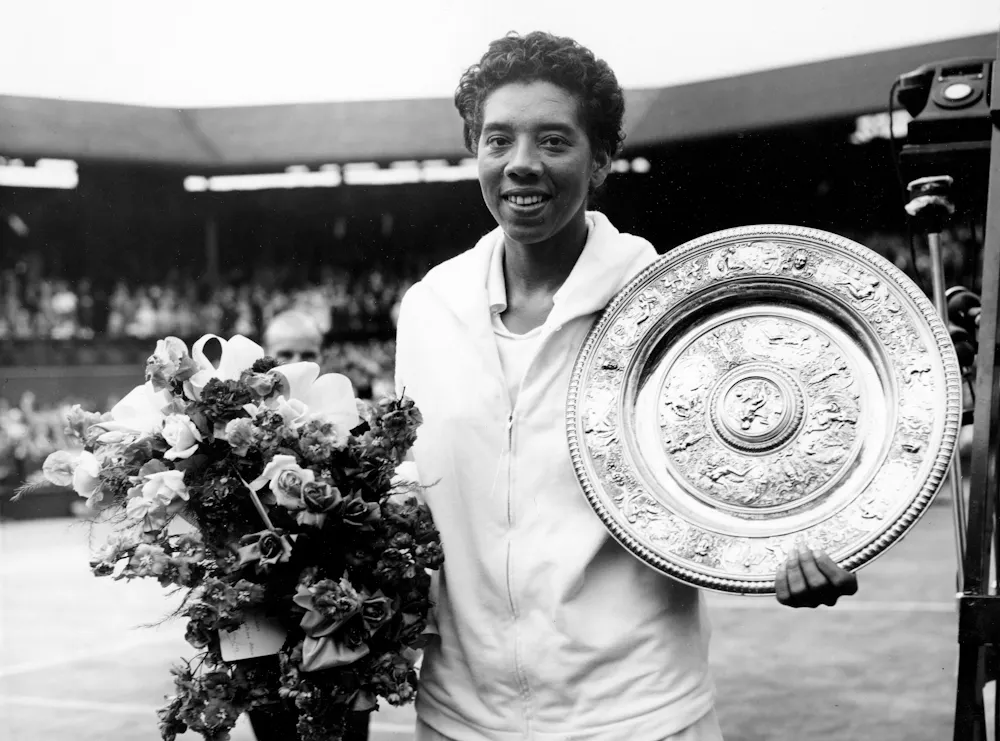
The first question is more about your memories of Althea: would you share the story of when you first saw her?
Billie Jean King: I think I saw Althea Gibson on the Grandstand Court at the Los Angeles Tennis Club when I was 13 [in 1956]. I had already been playing for two years and I wanted to become World No.1. I knew that she was No.1, so I wanted to see what a No.1 looked like. And when I saw her, I was amazed! I was like “oh gosh, I don’t know if I could ever get that good!”.
My parents always emphasized that each generation gets better, but I couldn’t imagine being better than Althea! But I had read everything about her and then, in 1958, she wrote her book “I Always Wanted To Be Somebody” so I kept that book in bed next to me. Reading it over, and over, and over again, and just reading anything I can get my hands on about her. It was just amazing that I got to get to know her for the rest of her life and up to her death. She became a really good friend. For many years, she wouldn’t see anybody, but then she allowed Zina Garrison and me to come and see her at East Orange, New Jersey, where she lived. I’ve had a very long relationship with her, and I know about what she accomplished. Her book is fantastic and I always remember reading in it: “You can’t eat your trophies”, because she was trying to figure out how to make a living.
At that time, we were amateurs, we didn’t make prize money like we do today, so it was very difficult for her, also being of colour, but I admired her so much because she was the first person of colour to win a Major. It was the French championships in 1956. And I thought that was really great, then she went on to win Wimbledon in 1957 and 58 and represented her country. One year, Queen Elizabeth was there when she won. She had such a difficult, but inspirational life for me, and she made a huge difference to me, as a player and as a friend.
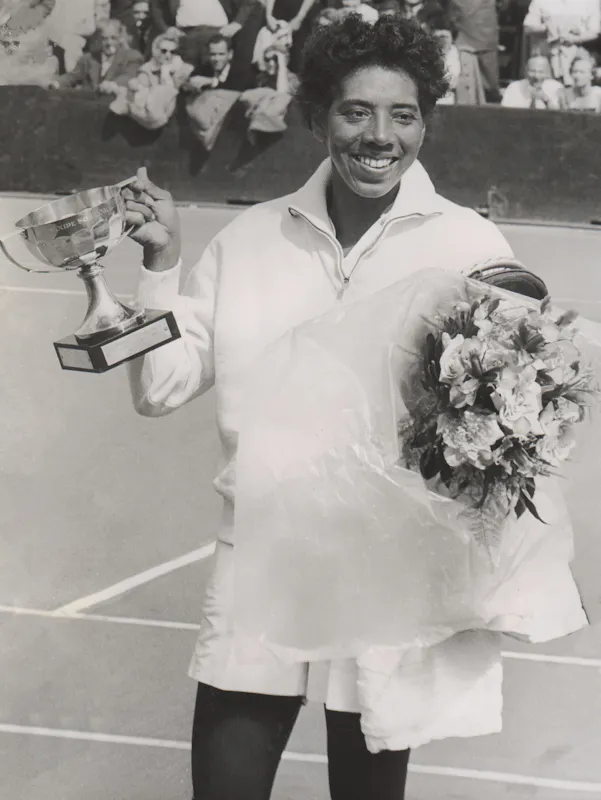
Do you think if she had had a different skin colour that her tennis career would have been different?
Oh absolutely! If she’d been white, she definitely would have had a different experience every day of her life, and she would have had a very different experience the way she was promoted or talked about. In particular in tennis because it was just about 100% white, except for a few players of colour, particularly the ATA - the American Tennis Association - where all the blacks came from. Whereas before 1950, nobody could play at the US Nationals, which is now known as the US Open, and she played, she was invited, thanks to the Association but I think primarily because the great Alice Marble [an outstanding talent in the 1930s] wrote an amazing letter to the USLTA [Lawn Tennis Association] to try to convince them to invite her. There’s a great photo of Alice Marble and Althea Gibson walking towards the clubhouse at the Westside Tennis Club where the US Nationals were being held. If she’d been white, it would have been a whole different story. But she’s an all-time great, I mean she really is, and this year she was finally appreciated as the trailblazer that she is, because she broke the colour barrier and finally was invited, and she represented our sport in a very classy, appropriate way, which I think also helped.
Do you also think that she was not only a role model for others in tennis but also in other sports?
She totally was a role model for everyone, on and off the court. She was also the first black woman to play on the LPGA tour, which is the professional golf tour for women now, and they were actually probably the first women’s sport in some way, as an association in 1950, there were 13 of them that started the LPGA. So she really broke colour barriers for two sports: tennis and golf. And she was a great athlete, because I had her come and play in the women’s sports superstars and she won the bowling and other things, she’s just a very gifted athlete and also she could sing. I think she had a record contract, and I know at the Wimbledon Ball she sang, and so she really was full, she had a lot going on for her, she was really special.
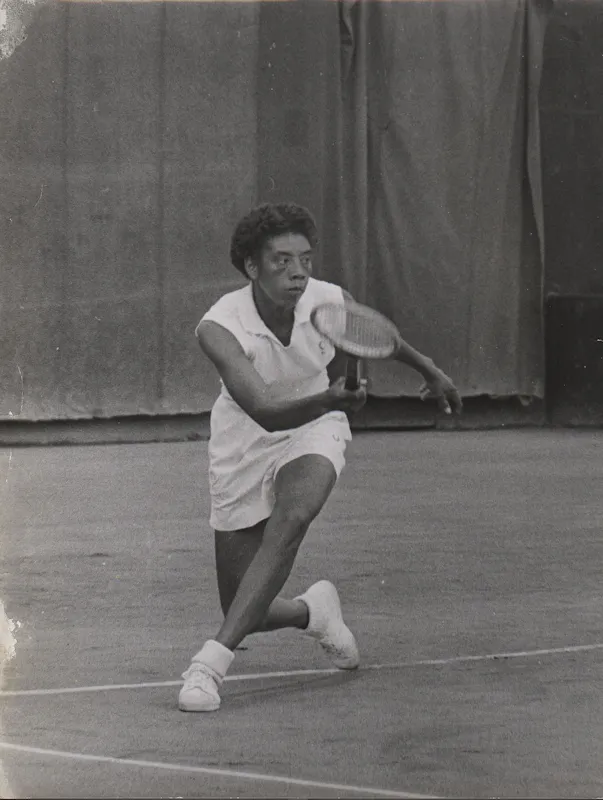
Last thing: if she were here with you today what would you say to her?
Well, the same things I said to her when she was alive: “thank you, without you I wouldn’t have had this life that I’ve had”. And I would love it because she would have been at the US Open last year when they celebrated the 75th year of breaking the colour barrier, she’s the one that did that, and we could’ve had her on Arthur Ashe Court, we could’ve been celebrating her in person which would’ve been great.
I thought about her every day during the Open, I think about her every day actually in my life, I don’t think there’s a day that ever goes by that I don’t think about Althea Gibson, and really thank her and tell everyone about her: I tell the young people, boys and girls, everyone, about what she’s accomplished and what she represented, and why we have a Serena Williams, or Venus, or Coco Gauff, or Zina Garrison, Chanda Rubin, I could go on and on! So without Althea Gibson, we would have never had all these great players of colour and she also made me pay attention to it because I would see her and think about her, but if you look at the Virginia Slims tournament, you look at all these different things, it’s because of Althea Gibson*.
*Billie Jean King is referring to how, without Althea Gibson, without her efforts to break down barriers, it would have never even occurred to her to push for greater equality. She cites the Virginia Slims series (the first women-only tour set up in 1971), but she could have also mentioned other battles in the fight for equality, such as the creation of the Women’s Tennis Association (WTA) two years later and the decision to award the same prize money to both women and men. All the progress made after Althea Gibson, in particular driven by Billie Jean King, was, in a way, made possible by everything she achieved.